Below we outline how to improve the peer selection process when valuing businesses. If you want to access our full free guide on the subject of choosing peer companies, you can find it here.
Context:
Valuation is all about comparison. You either compare the company to be valued (the “valuation object”) with valuation levels ofsimilar listed companies (“Peers”), with valuation levels when comparable companies where sold in the past (“Transactions”) or with an alternative investment (all Cashflow-based valuation methods such as DCF, APV, DDM, etc. calculate against a hypothetical alternate use of capital).
As a result, variability (depending on assumptions or based on evolution of the chosen comparisons over time) is inherent to the valuation practice. However, no method is prone to variations as high as the various multiples-based methods, therefore chosen peer group and transaction list has a huge impact on the result of your valuation.
Think of the example of Tesla: Do you compare it to car companies or to tech companies? If you say it’s a car company you will have a much lower valuation, because the multiples of car companies are much lower than those of tech companies.
That is why proposing the right peer groups is essential and why traditional methods such as only looking at the industry classification often fall short of the goal. Let’s review some best practices in building a peer group or a list of precedent transactions:
What makes a good peer group:
- Same or similar industry classification (because of similar competitive dynamics)-> This is the most important one, and often surprisingly challenging see below for some potential heuristics for industry similarity
- Same or similar country (because of similar regulatory and tax regimes)
- Comparable size (in terms of sales, number of employees, market cap, etc)
- Comparable operating metrics (or at the very least comparable operating models, such that Turo wouldn’t be compared against traditional car rental companies, and AirBnb wouldn’t be compared to traditional hotel chains)
- Comparable exposure to market dynamics (e.g. as shown in similar Beta)

What makes a good peer group:
- Overlap in analyst coverage (-> analysts often cover only one industry)
- Comparable company descriptions, Wikipedia pages, websites, reviews and comparative publications (G2, Gartner, SAE),
- Overlap of listed competitors (-> companies sometimes mention their own competitors in financial reports.
- Overlap/co-occurrence in news coverage, trade shows and conferences
Tired of wasting your time researching peer-groups manually?
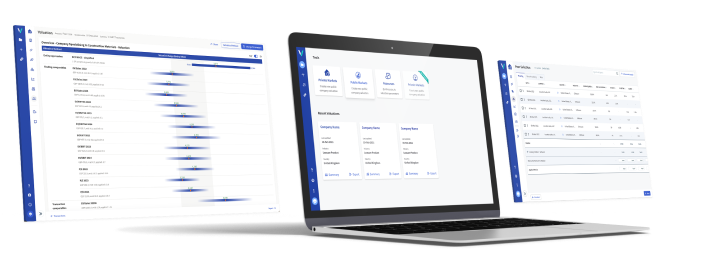
With Valutico, you get a customizable, high-quality peer-group in less than a minute. Claim your free Demo to learn how Valutico can make your life easier.